

Coastal Wildlife Habitats of Long Beach, MS
Salt Marsh Ecosystems
Salt marshes sit where land meets sheltered water and flood daily with tides. In Long Beach, marsh grasses like Spartina alterniflora dominate and trap sediment. These grasses provide food and cover for fiddler crabs, marsh periwinkles, and juvenile fish.
Marshes act as nurseries. Young shrimp, mullet, and menhaden find shelter among stems and mud, which reduces predation. Wading birds—herons and egrets—hunt the shallow channels at low tide, while migratory shorebirds use exposed marsh edges during fall and spring.
Salt marshes also buffer storm surge and filter runoff. Healthy marshes reduce erosion and improve water clarity by trapping nutrients and sediment. Conservation efforts focus on preventing trampling, limiting shoreline armoring, and restoring native grass beds.
Dune Vegetation Zones
Dune systems form the first line of defense along Long Beach’s shoreline. Beach grasses such as Uniola paniculata (sea oats) and sandbur stabilize dunes with deep roots. These plants capture blowing sand and help dunes grow taller over time.
Dunes support insects, dune beetles, and nesting sites for shorebirds like least terns and sometimes American oystercatchers. Small mammals and reptiles use the vegetated dune base for shelter and foraging. Human foot traffic and vehicle use can harm these zones quickly, so marked pathways matter.
Management practices include planting native grasses, placing sand fences, and restricting access during bird nesting season. These steps help keep dunes functional for both wildlife and coastal protection.
Tidal Flats
Tidal flats in Long Beach expose large mud and sand areas at low tide. These flats host rich invertebrate communities—polychaete worms, clams, and small crustaceans—that support local food webs. Migrating shorebirds probe the mud for prey during their stopovers.
Flat areas warm and dry between tides, which concentrates prey and makes feeding efficient for birds like sandpipers and dowitchers. Fish such as juvenile flounder and sheepshead move onto flats at high tide to feed.
Tidal flats are sensitive to boat wakes, pollution, and sediment changes. Protecting water quality and limiting dredging helps maintain the invertebrate populations that sustain higher trophic levels.
Nearby Estuaries
Estuaries near Long Beach include bayous and lagoonal inlets where freshwater mixes with Gulf water. Bear Point Bayou on the University of Southern Mississippi Gulf Park Campus is one local example of a brackish waterway that supports diverse life.
Estuaries provide complex habitats—mangrove-like marsh edges, submerged aquatic vegetation, and oyster reefs. Oysters and submerged grasses improve water clarity and provide attachment sites for small organisms. Predators such as red drum and blue crab use estuaries as feeding grounds.
People benefit too: estuaries support recreational fishing, education, and local fisheries. Maintaining freshwater flow, reducing nutrient runoff, and conserving adjacent wetlands are key actions to keep these estuarine systems productive and resilient.
Wildlife Species Native to Long Beach Shores
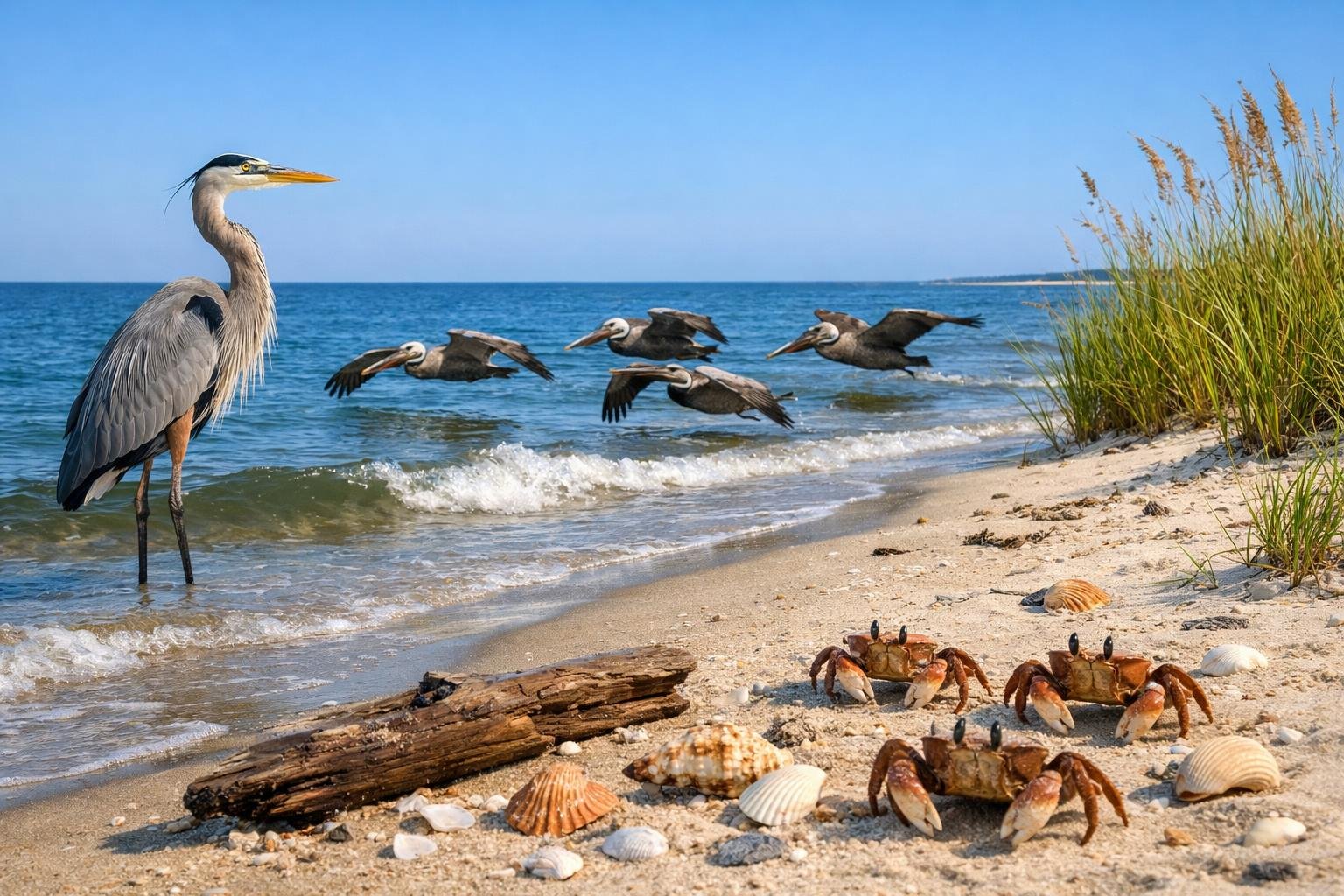
Long Beach shores host a mix of coastal birds, inshore fish, sea turtles, and shoreline shellfish that visitors commonly see. Habitats include sandy beaches, shallow surf, tidal pools, and nearby marsh edges that each support different species.
Shorebirds and Migratory Birds
Shorelines attract sandpipers, plovers, and terns that feed on small invertebrates in the wet sand and surf. The Wilson’s plover nests on sandy dunes and forebeaches during spring and summer. Small flocks of semipalmated sandpipers and least sandpipers pass through during migration, often seen probing the wet sand at low tide.
Gulls are common year-round; laughing gulls dominate in summer while various larger gulls appear in winter. Oystercatchers and willets use the exposed flats and marsh edges to find crabs and worms. Birdwatchers should bring binoculars and a field guide to confirm similar-looking species.
Marine Life and Fish
Nearshore waters hold mullet, flounder, and spotted seatrout that anglers target from piers and shallow bays. Mullet often move in visible schools close to shore, while flounder lie flat on the bottom waiting to ambush prey. Seatrout prefers grassy and sandy bottoms near inlet channels.
Smaller reef and rock areas can host blennies, gobies, and juvenile drum. Many species use the shallow bays and tidal creeks as nursery grounds. Visitors fishing from shore should check local regulations and size limits before keeping fish.
Sea Turtles
Leatherback, green, and loggerhead sea turtles visit Mississippi beaches; loggerheads most commonly nest along the Gulf coast. Nesting season runs mainly from May through August. Beachgoers may spot tracks or nesting sites at night, but they should avoid disturbing marked nests.
If a person finds a live hatchling or nesting turtle, they should contact local wildlife authorities rather than move the animal. Light pollution, beach furniture, and unstable dunes reduce nesting success. Conservation groups and rules aim to protect nests and guide safe viewing.
Shellfish and Crustaceans
Mud crabs, ghost crabs, and fiddler crabs scuttle across sand and marsh edges; ghost crabs dig round burrows above the high-tide line. Blue crabs inhabit tidal creeks and shallow bays and are important both ecologically and for local fisheries. Harvest rules apply to crabbing; people should follow size and season limits.
Bivalves like ribbed mussels and hard clams live in marsh beds and protected flats where they filter water and provide food for birds and fish. Collectors must wash and cook shellfish properly to avoid health risks and follow local harvesting advisories.
Relevant reading on coastal wildlife and habitats appears in guides to beach species and regional conservation materials, including details on bird areas and broader Gulf biodiversity. For more on local nature spots and viewing tips, see the Long Beach nature guide.
Responsible Wildlife Viewing Tips
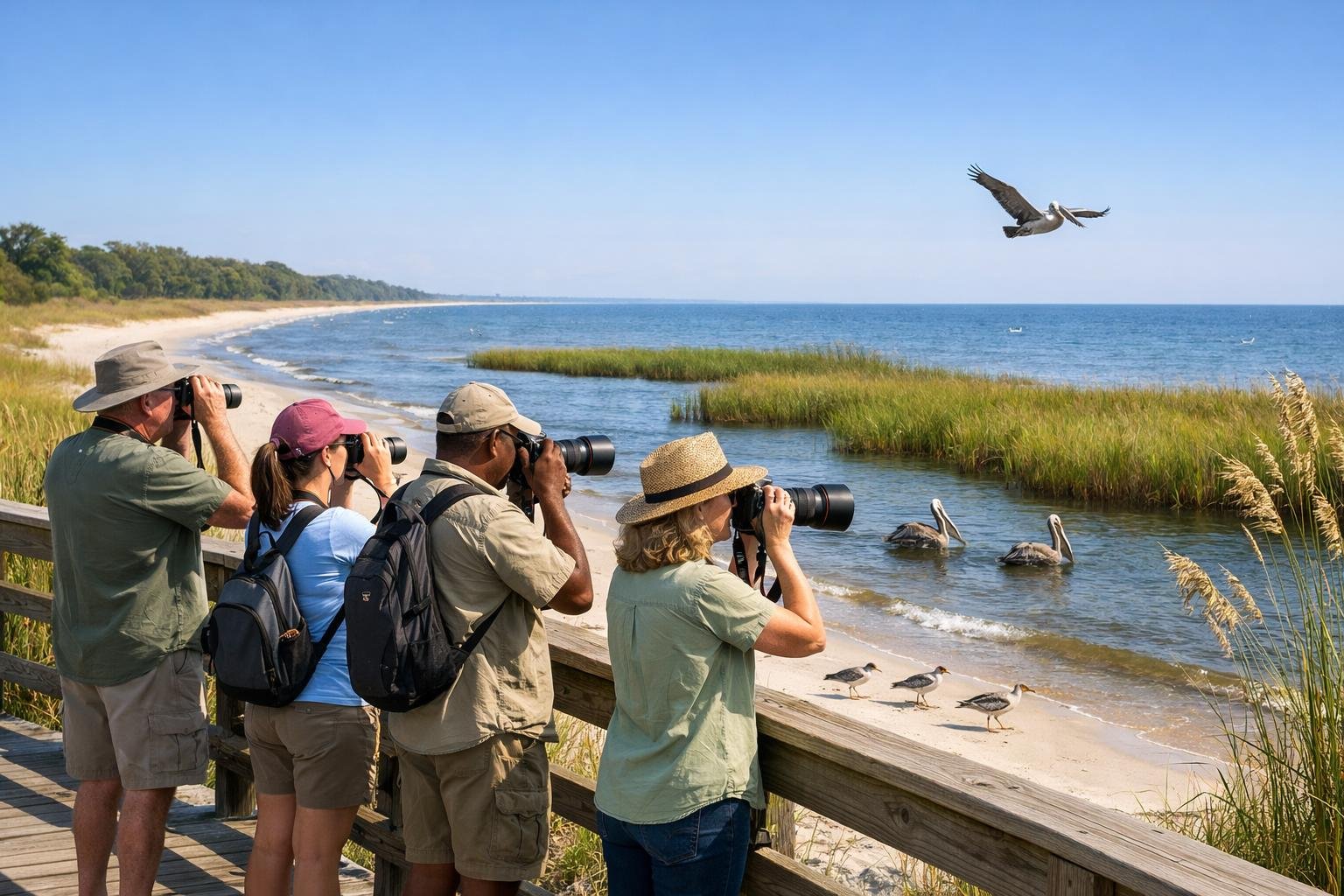
Visitors should keep a safe distance from animals. Use binoculars or a zoom lens to observe without getting close. This reduces stress on animals and keeps people safe.
Do not feed or touch wildlife. Feeding alters natural behavior and can harm animals. It is often illegal and can spread disease.
Move slowly and speak quietly when near wildlife. Sudden actions can startle animals and spoil viewing chances. Patience often leads to better sightings.
Stay on trails and follow posted rules. Trails protect fragile habitats and nesting areas. Local guidelines may set specific viewing distances for marine life; check marine life viewing rules before visiting NOAA Fisheries’ marine life viewing guidelines.
Limit group size and avoid crowding an animal. Small, calm groups cause less disturbance. If others are present, share viewing space and time.
Pack out trash and avoid leaving food or bait. Litter attracts animals to unsafe areas. Proper waste disposal helps keep beaches and wetlands healthy.
Use tools that minimize impact. A compact pair of binoculars helps with distant viewing. Bring a camera with a zoom instead of approaching animals for close photos.
Storage Unit Rentals in Long Beach, MS
Local residents and seasonal visitors often need extra space for gear, boats, and belongings. They can choose from drive-up units, climate-controlled options, and outdoor vehicle parking to match their needs.
Iron Storage Unit Rentals in Long Beach, MS offer multiple locations across the city, with both drive-up and temperature-controlled units to serve students, families, and small businesses.
Shoppers can compare units and reserve online without a card at services that list many local sites, making it easier to find the best fit and price quickly.