
Notable Historic Homes in Monroe, LA
If you’re exploring historic homes and architecture in Monroe, these properties show the city’s range of architectural styles, historical figures, and preservation efforts. They include an eclectic castle-like residence, a Prairie School design by a famed architect, a home tied to the soft-drink industry, and a well-preserved Colonial Revival estate.
Layton Castle
Layton Castle stands out for its unusual castle-like appearance in a city of broadly Southern-style homes. Built in the early 20th century, it uses stonework and crenellated parapets that mimic medieval fortifications while remaining a domestic residence.
The house’s design emphasizes vertical towers and narrow windows, giving it a landmark silhouette visible from several blocks away. Its masonry and decorative details reflect local masons’ skill and the owner’s taste for dramatic, European-inspired architecture.
The property also features mature trees and original boundary walls that contribute to its historic setting. Preservation efforts have focused on stabilizing stonework and retaining original exterior features that define its character.
Cooley House
The Cooley House is a rare Southern example of the Prairie School and was designed by Walter Burley Griffin. Griffin sketched the design in 1908 and the house—built in the mid-1920s—shows the low horizontal lines, broad eaves, and integrated landscape typical of the style.
Its layout connects indoor and outdoor spaces with grouped windows and sheltered porches. The interior contains original woodwork and built-ins that reflect the architect’s emphasis on craftsmanship.
Recognized on the National Register of Historic Places, the Cooley House draws attention for its national-level importance and the fact that Griffin, an internationally known architect, left a clear local legacy. Learn more about the property and its history at the Cooley House website (Cooley House – A Walter Burley Home).
Biedenharn House
The Biedenharn House links Monroe to a national food-industry story: it was the home of Joseph A. Biedenharn, who first bottled Coca-Cola. The house displays early 20th-century domestic styles and period rooms that reflect the family’s local prominence.
Architectural features include formal parlors, decorative woodwork, and original fixtures that offer a window into life in that era. The site often hosts tours and exhibits that discuss both the household and the bottling history tied to the family.
Landscaping and outbuildings on the property help interpret how a successful business family lived and worked. Visitors can see artifacts and displays that connect the house to broader commercial history.
Masur House
Masur House exemplifies Colonial Revival styling and serves as a preserved example of early 20th-century taste among Monroe’s elite. The house highlights symmetry, classical columns, and a formal entryway that give it a dignified, balanced look.
Interiors retain period moldings, staircases, and room layouts that emphasize family and social functions of the time. The property sits on a landscaped lot with historic plantings that match the house’s formal character.
Local preservation groups have documented the Masur House’s architectural details and worked to keep original finishes intact, maintaining its role as a representative local landmark.
Architectural Styles and Influences in Monroe
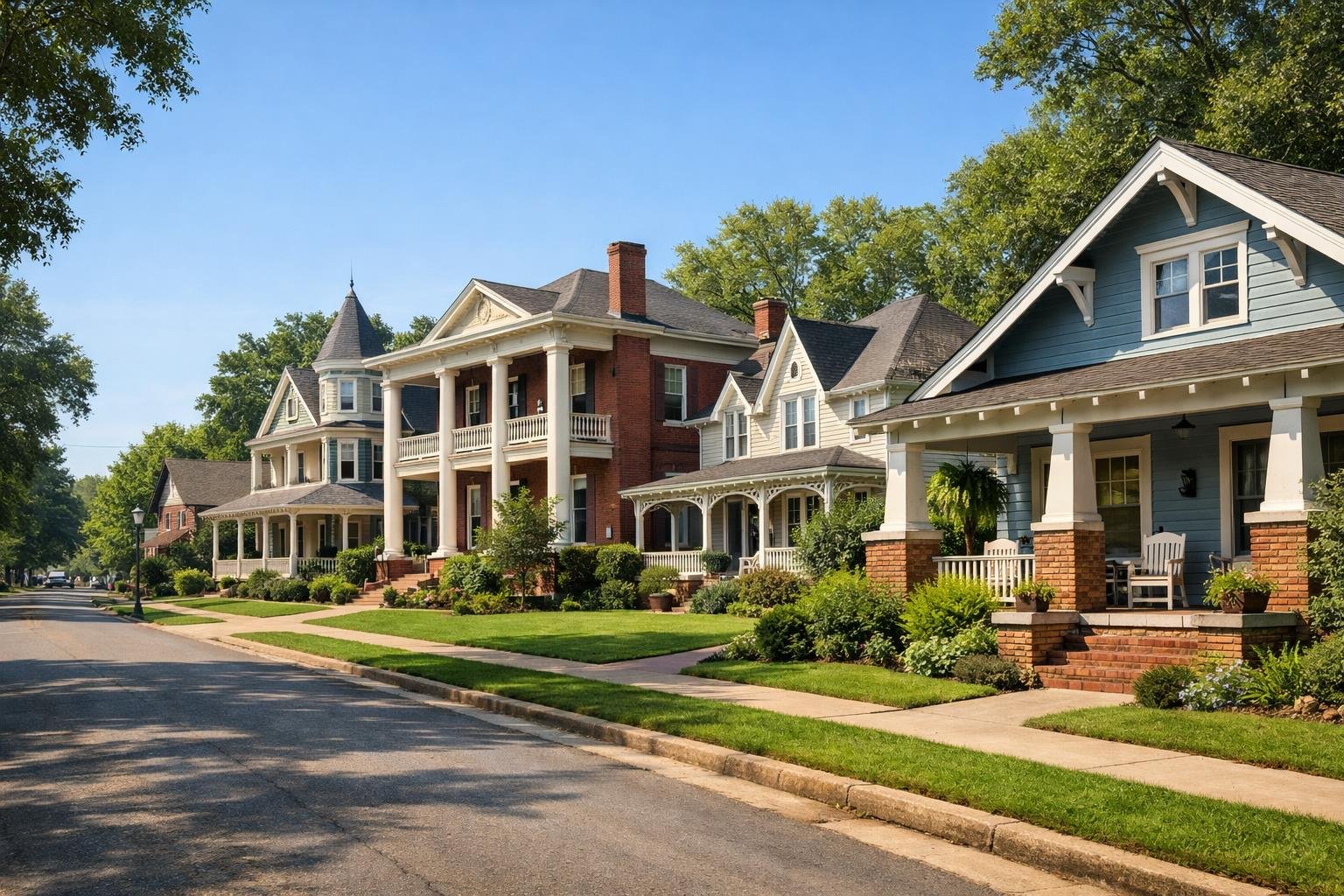
Monroe’s residential fabric shows clear lines, decorative trim, and practical layouts. Many homes combine formal symmetry, handcrafted woodwork, and local building traditions shaped by the climate and river economy.
Colonial Revival
Colonial Revival in Monroe emphasizes balanced facades and classical details. Homes often feature centered front doors with sidelights, transoms, and symmetrical window placement. Full-height or single-story porches with square or round columns are common. These elements echo the Greek Revival and earlier Georgian models but were adapted for 20th-century family life.
Materials mix brick and wood clapboard, with low-pitched roofs and sometimes dormers for attic light. Interiors favor formal parlors and defined dining rooms. Preservation guidelines for the city note this style’s frequent presence in historic districts and the need to keep original door surrounds and porch columns intact. See the Monroe design review for treatment guidance.
Craftsman Architecture
Craftsman houses in Monroe display broad eaves, exposed rafter tails, and tapered porch columns set on brick or stone piers. Bungalows dominate this category, usually one to one-and-a-half stories, with wide front porches that extend living space outside. The emphasis lies on visible joinery and natural materials.
Windows often include multi-pane upper sashes over single-pane lower sashes. Interior woodwork—built-ins, window seats, and wide trim—signals the craftsman focus on utility and craftsmanship. Neighborhoods in the Monroe Residential Historic District contain many intact bungalows, making this style key to local preservation efforts.
Queen Anne Style
Queen Anne houses in Monroe present asymmetry, steep roofs, and decorative trim. Towers or turrets, wraparound porches, and patterned shingles create a textured facade. Interiors include ornate staircases, turned balusters, and detailed plaster or wood moldings.
These homes frequently use varied wall surfaces—clapboard combined with fish-scale shingles—and stained glass windows. Examples like late-19th-century cottages illustrate Eastlake decorative details. They often stand on prominent lots and contribute to the historic character of walking tours and heritage markers in downtown and older residential areas.
Eclectic Influences
Monroe shows eclectic mixing: Spanish Mission arches, English cottage rooflines, and even Prairie School geometry in rare examples. Homeowners and architects blended forms to suit tastes and climate, producing hybrids rather than pure academic models. Materials and details shift block to block.
This mix appears in the Monroe Residential Historic District and along South Grand Street, where individual buildings add distinct stylistic notes to a continuous streetscape. Local preservation efforts point to the importance of recognizing and retaining these combined features when repairing roofs, porches, or exterior trim to keep each building’s layered history visible.
Preservation Efforts and Tours
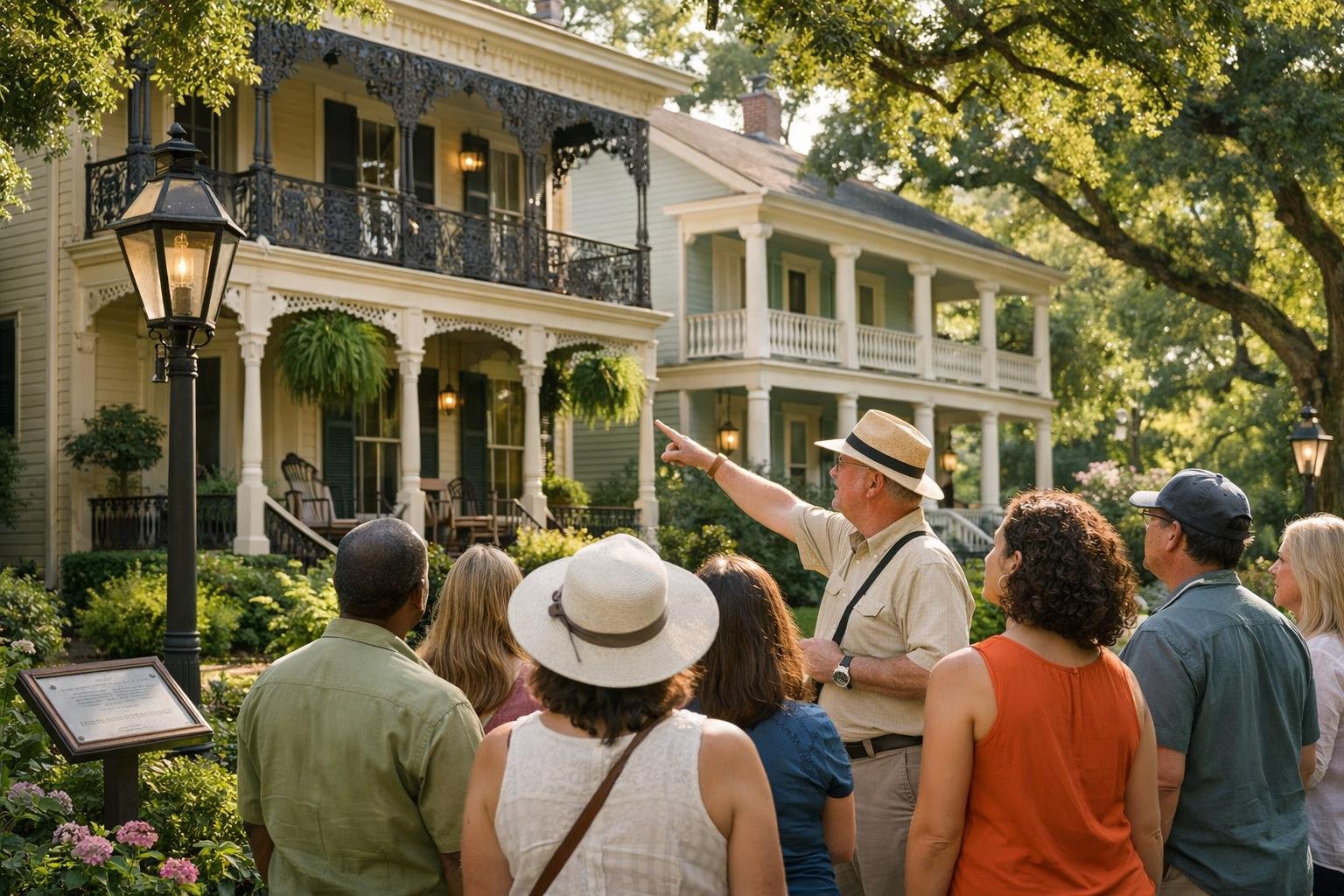
Local groups lead most preservation work in Monroe. They document historic homes, raise funds, and advise owners on proper repairs. The Monroe Historic Society offers events and tours that help teach the public about local architecture and history.
City commissions review changes to protected properties. The Heritage Preservation Commission posts meeting agendas and decisions that affect historic districts and landmarks. Property owners often consult the commission before starting restorations.
Restoration projects combine private investment and nonprofit support. Volunteers and specialists patch roofs, repair porches, and match original materials when possible. The Cooley House restoration shows how careful work can save a rare historic property.
Visitors can join guided tours, special events, and open-house weekends to see restored interiors and hear conservation stories. Tours often highlight architectural details, construction methods, and period furnishings. Many events include talks, photo displays, and hands-on activities for students.
Practical tips for visitors and homeowners:
- Book tours in advance during high season.
- Respect private property and posted preservation rules.
- Ask for documentation or plaques that explain a building’s history.
These efforts keep Monroe’s architectural past visible and usable for future generations.
Storage Unit Rentals in Monroe, LA
Many historic homeowners use storage units to protect furniture, trim, and seasonal decor during renovations. Climate-controlled units help keep woodwork and fabrics from warping or molding in humid weather.
Facilities across Monroe offer drive-up access, indoor climate control, and gated security. Renters can choose short-term or month-to-month leases to match project timelines.
Local options include family-run sites and national chains, so availability and price vary by location. For convenience, some places let tenants rent and move in online with immediate gate access.
Iron Storage also operates a facility in Monroe, providing standard and climate-controlled units for residential and commercial needs.