
Best Practices for Organizing Your Move
Following packing tips for moving during summer in Rockingham can help make your relocation more organized, efficient, and heat-safe. Plan tasks by date, pack one room at a time, and decide what to keep, sell, or donate while using clear labels, inventory lists, and color-coded systems to simplify unpacking.
Creating an Efficient Packing Timeline
They should set a firm move date and work backward. Book movers or a truck 6–8 weeks ahead to avoid peak summer shortages. Reserve large items—piano, appliances, or specialty crates—at least 8 weeks out.
Make a weekly schedule with specific targets: week 1—declutter and gather boxes; week 2—pack nonessentials (books, decor); week 3—box kitchen items not needed for daily meals; week 4—finish seasonal clothing and start labeling. Two days before moving, they pack a “day-of” box with toiletries, chargers, snacks, and important documents.
Use a shared checklist on a phone or cloud doc so everyone knows assignments. This reduces last-minute confusion and helps during Rockingham’s hot afternoons.
Sorting and Downsizing Belongings
They should sort items into four piles: keep, sell, donate, trash. Start early to avoid rushed choices under heat. Handle bulky or heavy things first—furniture and large decor—to see how much space remains.
For clothing, use the one-year rule: if not worn in 12 months, move it to donate or sell. Photograph items intended for sale and list them online by week three. For papers, shred what’s unnecessary and file important records in a labeled folder. Electronics get a separate box with cords taped and notes on each device.
Donate or trash items at least two weeks before moving so pickups or drop-offs fit the timeline. Downsizing cuts costs and lowers time in the heat while loading and unloading.
Labeling Strategies for Easy Unpacking
They should label every box on three sides: top and two long sides. Use a permanent marker and large, clear words like “Kitchen—Plates” or “Master Closet—Shoes.” This lets movers and family place boxes in the correct rooms quickly.
Adopt a color code: assign a colored sticker to each room (blue for kitchen, green for bedroom). Put an item number on each box and maintain a short inventory list in a spreadsheet or phone note that maps numbers to contents. For fragile items, add “FRAGILE” plus handling instructions.
Mark boxes needed first at the new home as “OPEN FIRST” and include the day-of box in this group. This approach saves time, reduces moving-day stress, and cuts exposure to Rockingham’s summer heat by speeding up unloading.
Protecting Items From Heat and Humidity
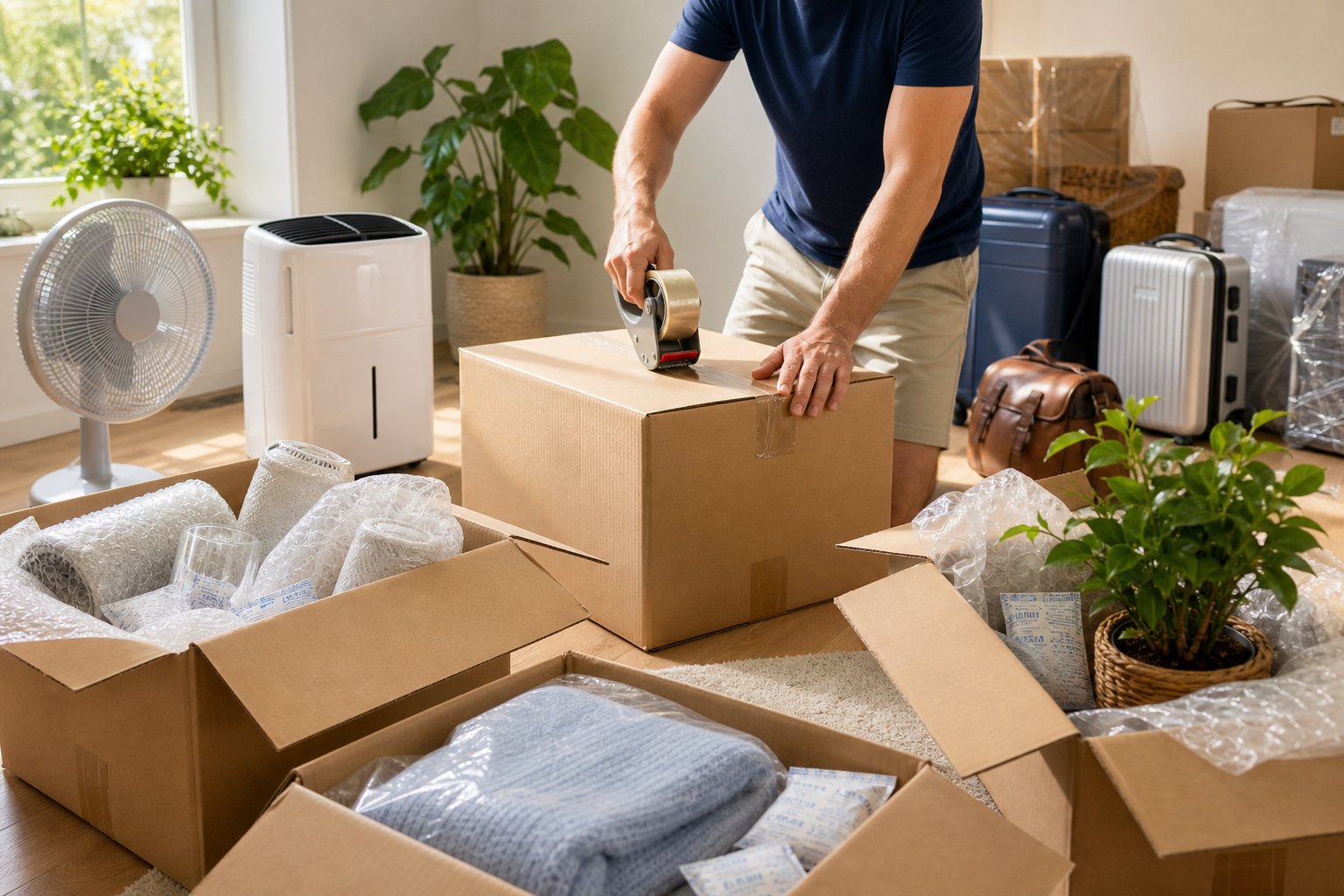
Keep heat- and humidity-sensitive items out of direct sun and away from warm walls. Use breathable packing, moisture control, and climate-aware timing to cut risk during loading, transport, and storage.
Selecting Appropriate Packing Materials
Choose corrugated boxes rated for heavy duty for linens, clothing, and books to resist warping in high humidity. Use acid-free tissue for clothing and artwork; it limits moisture contact and prevents yellowing. For porous wood furniture, wrap corners with moving blankets and seal with breathable stretch wrap to block dust but allow trapped moisture to escape.
Include desiccant packs or silica gel in every closed box that holds paper, photos, or leather; one 5–10g packet per small box or 50–100g per large box works well. Use plastic bins only for short-term moves or if they will stay climate-controlled, because sealed plastic can trap humidity and cause mildew.
Label boxes with temperature or humidity warnings and pack cold-sensitive items on top. Keep a separate “first unload” stack for anything that should go straight into an air-conditioned space.
Safeguarding Temperature-Sensitive Possessions
Move medications, candles, plants, and perishable cosmetics in a cooler with ice packs for short trips. For longer hauls, arrange transport in a climate-controlled vehicle or schedule the move early morning or late evening when temperatures are lowest.
Artwork and framed prints need rigid boxes or custom crates with corner supports. Place acid-free interleaving between pieces and include climate stabilizers like buffered paper. For wooden antiques, avoid plastic sheeting directly on the wood; use breathable pads and keep humidity near 40–50% when possible.
Houseplants should be watered lightly and placed in ventilated boxes. If moving far, check state and local rules on transporting plants. Meltable items like candles or wax decor should ride in a cooled cabin or a shaded, air-conditioned truck compartment.
Storing Electronics and Fragile Items Safely
Power down and remove batteries from electronics to prevent corrosion and heat damage. Wrap flat-screen TVs and monitors in a cotton sheet and then bubble wrap over the frame; stand screens upright during transport to avoid pressure on panels.
Seal small electronics in anti-static bags and place in well-padded boxes with foam inserts to prevent movement. Use cable ties to keep cords bundled and label them for reassembly. For fragile glassware and ceramics, use layered packing: crumpled paper or foam first, then individual wrapping, and place items stem-down or handle-inward in dividers.
If storing in a facility, choose climate-controlled units and elevate boxes off the floor on pallets. Track serial numbers and take photos before packing to speed claims or repairs if heat, moisture, or drops cause damage.
Local Considerations for Rockingham Moves

Rockingham has hot, humid summers and occasional afternoon storms. Movers should plan for heat, afternoon rain, and local traffic patterns to protect belongings and avoid delays.
Working Around Local Weather Patterns
Rockingham summer days often reach the mid-80s to 90s°F with high humidity and brief, heavy thunderstorms in the afternoon. Movers should schedule heavy lifting for early morning when temperatures are cooler and humidity is lower. Early starts reduce heat stress on people and limit time that heat-sensitive items sit in a hot truck.
Pack electronics, plants, and medications in insulated containers or a climate-controlled vehicle. Use breathable moving blankets for furniture to prevent moisture trap during sudden showers. Keep a small emergency kit with water, cooling towels, and a battery fan in case of heat-related delays.
Check the five-day forecast and radar before move day. If storms are likely, choose a window of clear weather or arrange covered loading zones to avoid wet floors and muddy driveways.
Choosing the Right Moving Day
Pick a weekday morning when possible to avoid higher weekend and summer-season traffic. Rockingham’s main streets can get busy around school dismissal and shift-change times at local factories. Leaving by 7:00–8:00 AM helps bypass peak traffic and keeps moving crews cooler.
Avoid mid-July holidays and the last weekend of July when demand and moving rates rise. If hiring movers, book at least 4–6 weeks ahead; local companies fill fast in summer. For long drives out of Rockingham, plan departures before noon to reduce risk of afternoon storms and to reach cooler regions by evening.
Storage Unit Rentals in Rockingham, NC
They can find many storage options in Rockingham to fit short moves or long-term needs. Facilities offer drive-up units, climate-controlled spaces, and vehicle parking. Prices and unit sizes vary, so comparing helps find the best fit.
Renters should note special move-in deals and low monthly rates at local providers. Iron Storage advertises a range of sizes starting near budget rates for town moves.
Security and cleanliness matter in hot months. Choose a facility like Iron Storage Unit Rentals in – Rockingham, NC with gated access, good lighting, and routine pest control. Climate control helps protect wood, paper, and electronics from heat and humidity.
They should measure belongings and pick a unit one size larger than estimated. Use shelving, clear bins, and labeled boxes for easy access. Lock type matters; a disc or cylinder lock offers better theft resistance than a cheap padlock.
For portable options, residents can use container-style rentals dropped at the home. These let people pack at their pace and avoid moving in high heat. Drop-off services in the area serve locations near local landmarks and college campuses.