
Choosing the Right Storage Facility
Security Features to Consider
They should offer gated access with unique PINs or keycards to limit entry. Look for 24/7 video surveillance that covers all drive lanes and entry points, not just the office area.
On-site staff or regular patrols add a layer of protection, especially overnight. Confirm lighting across the lot and motion-activated lights near unit doors to deter vandalism.
Check for fenced perimeters with anti-climb features. Ask the manager about alarmed individual units and whether tenants can add locks or wheel boots. Demand written procedures for handling unauthorized entry and theft claims.
Accessibility and Hours of Operation
Confirm gate hours and if drive-up access is available for large RVs and trailers. Wide aisles, high clearance, and pull-through spots matter for easy maneuvering.
Ask whether they allow after-hours access or have 24/7 entry with secure PINs. If the traveler leaves town often, choose a site with flexible entry so maintenance or renters can reach the RV when needed.
Verify proximity to major routes like Ross Clark Circle or U.S. 231 to save time hauling the rig. Check if on-site fuel, dump stations, or service partners are offered, which can be helpful for quick turnarounds.
Climate-Controlled Storage Options
Climate control helps prevent mold, mildew, and cracked seals in electronics and upholstery. For Dothan’s hot, humid summers, choose units with HVAC or humidity control rather than relying on ventilation alone.
Enclosed storage protects slide-outs, awnings, and decals from sun damage and storms. Compare temperature ranges and dehumidification specs; some facilities list max/min temps and target relative humidity.
If the RV has sensitive components (generators, lithium batteries, or wood cabinets), ask about continuous climate monitoring and emergency response for HVAC failures. Also confirm additional costs and whether the unit fits the RV’s dimensions before signing.
Preparing Your RV for Storage
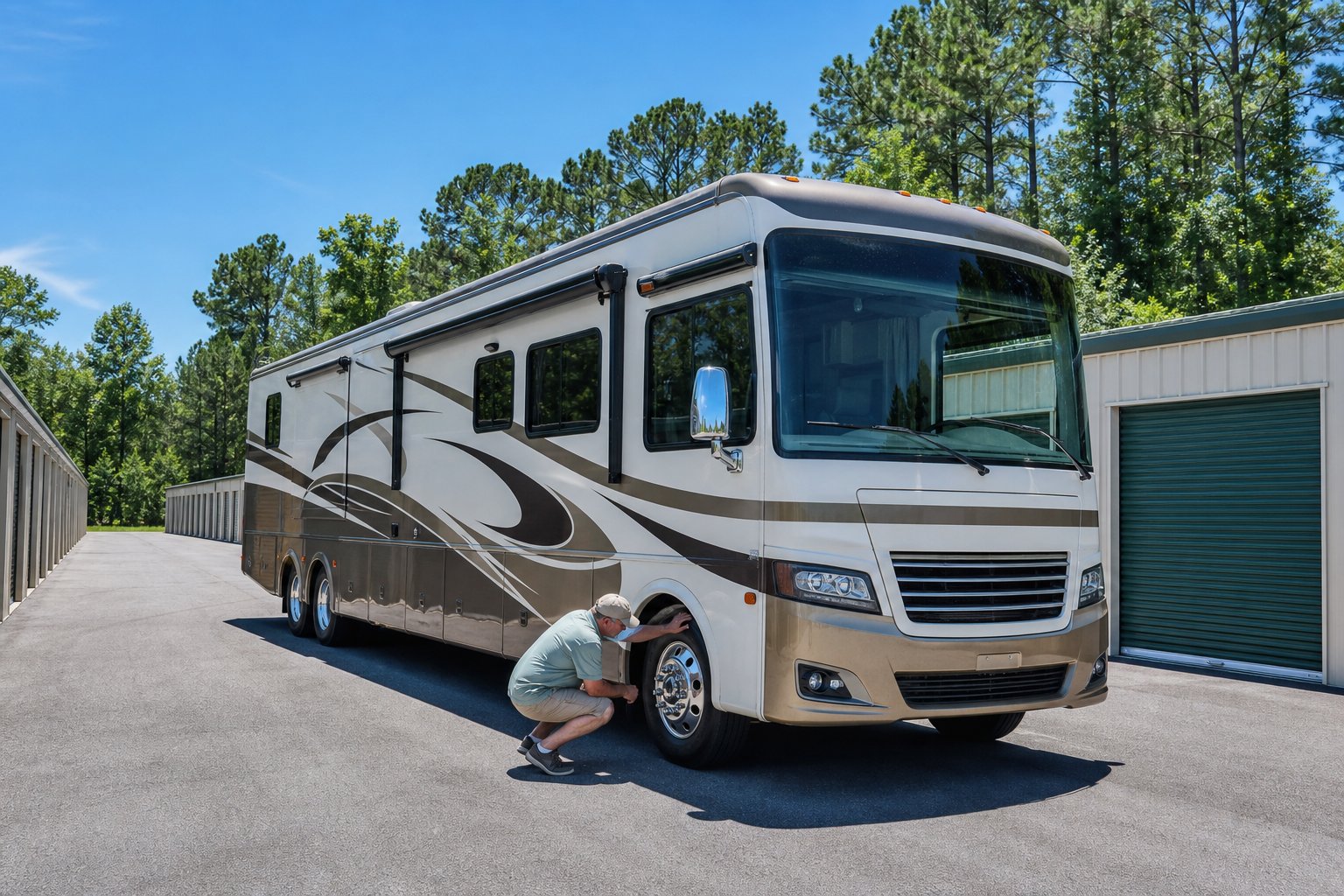
Complete basic cleaning, secure loose items, winterize or winter-prep water systems, remove or maintain batteries, and check tires and seals. Address fuel, propane, and pest risks now to avoid damage while parked.
Cleaning and Maintenance Essentials
They should empty and clean all food areas to prevent pests and odors. Remove perishable items, wipe cabinets with a mild cleaner, and leave vents slightly open for airflow. Clean the refrigerator and leave the door propped if storage rules allow.
They should flush and winterize the water system if temperatures will drop, or at least sanitize tanks before storing for long stretches. Drain the freshwater, black, and gray tanks; use RV-safe antifreeze when needed. Replace cabin and engine air filters and check fluid levels.
They should inspect roof seals, windows, and slide seals for cracks. Reseal any gaps with RV-grade sealant. Lubricate slide mechanisms and hinges, and tighten loose bolts to prevent water intrusion and rattles.
Protecting Against Humidity and Weather
They should choose covered or indoor storage if possible during Dothan’s hot, humid summers. If only outdoor storage is available, use a breathable RV cover made for the vehicle’s size to block UV and reduce heat buildup.
They should raise tire pressure to the manufacturer’s recommendation and use tire covers to shield rubber from sun and ozone. Place plywood or RV tire jacks under tires for long-term parking to reduce flat spots.
They should install moisture absorbers in cabinets and the refrigerator to prevent mold. Use silica gel or DampRid-style products and change them seasonally. For heavy storms, ensure the parking spot drains well and that awnings are secured or retracted.
Battery and Propane Safety Precautions
They should disconnect and remove the house battery for long storage. Store batteries in a cool, dry place on a non-conductive surface and keep them charged at about 50–80% using a smart maintainer.
They should run the engine battery to a full charge and use a trickle charger if the RV will be plugged into power. Label battery cables and cover terminals to prevent accidental shorts.
They should turn off the propane at the tank and close the tank valve. For storage over several months, empty small portable propane cylinders and store them per local rules, or remove them entirely and keep them offsite.
They should test for leaks after reconnecting propane. Use a leak-detection spray on fittings and regulator, and replace any cracked hoses or corroded fittings before use.
Local Regulations and Community Resources
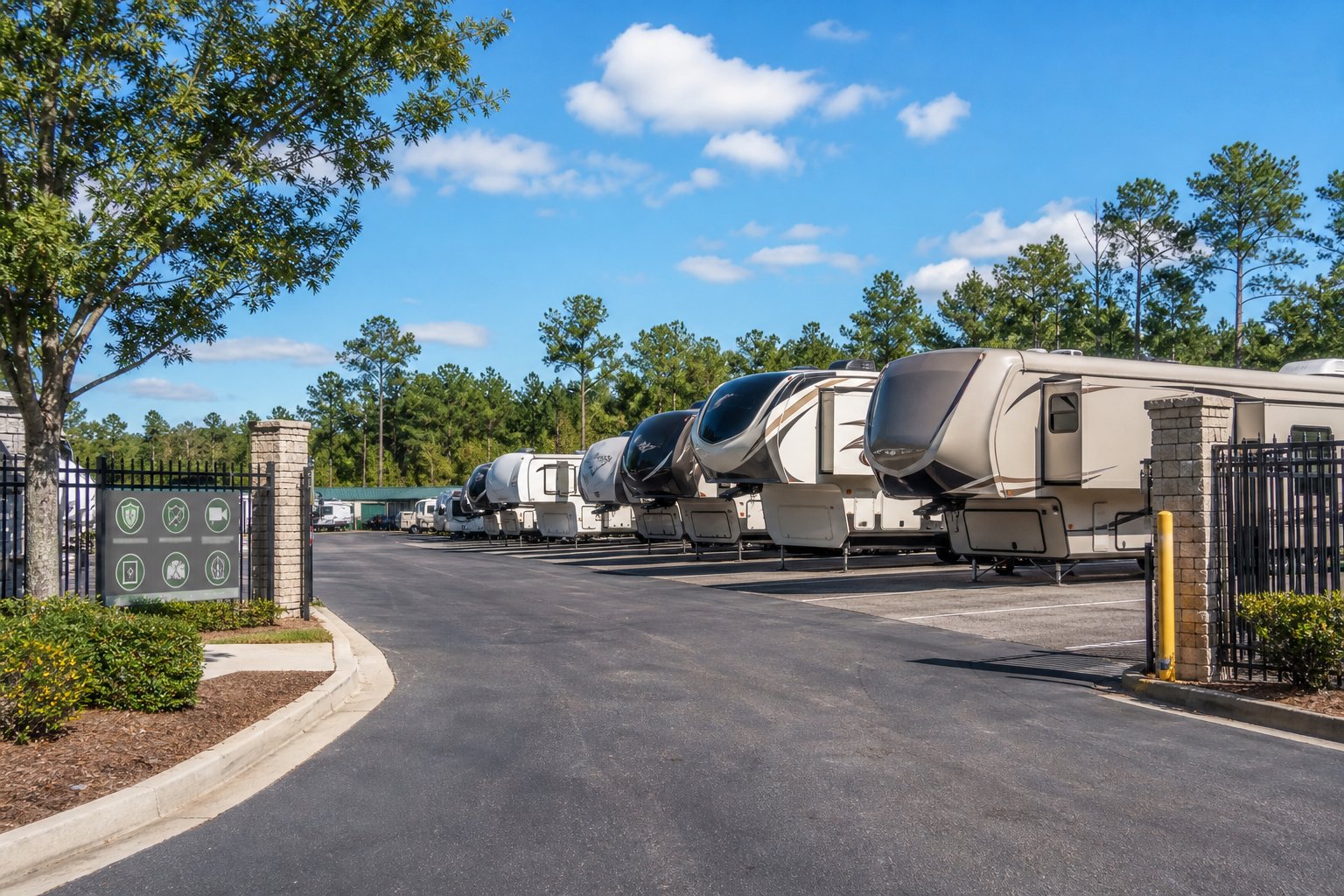
Dothan property rules, parking limits, and nearby services affect where and how travelers store an RV. Knowing permit needs, HOA rules, and local repair shops saves time and prevents fines.
Understanding Dothan Zoning Laws
They must check city zoning codes for allowed RV parking on private lots. Dothan often restricts long-term street parking and may require setbacks from property lines. Homeowners associations can add stricter limits, so reviewing HOA covenants matters.
For temporary stays, some residential areas allow short-term parking but limit duration and number of vehicles. Commercial or storage-zoned parcels usually permit long-term RV storage if the site meets screening and surface rules. When in doubt, call Dothan Planning and Development or view municipal code online to confirm rules before leaving an RV unattended.
Locating Service Providers for RV Upkeep
Travelers should use local listings and reviews to find mechanics, propane refill stations, and mobile techs. Look for facilities offering RV-specific services: sewer hookups, winterization (if needed), roof and slide repairs, and battery sales. Compare hours and whether they accept walk-ins or need appointments.
For covered or climate-controlled options, check nearby storage businesses that list features and security on their pages. One useful place to compare local options and read reviews is the RV storage directory for Dothan, which shows facility types and amenities to help pick the right provider.
Storage Unit Rentals in Dothan, AL
Travelers can find a range of unit types in Dothan, from small lockers to large spaces for RVs and boats. Many facilities offer covered or outdoor spots and some list first-month discounts to help new renters save.
It helps to pick a facility near main roads for easier access. For example, facilities on Brannon Stand Road provide a variety of unit sizes and convenient access for large vehicles like RVs and trailers (see Brannon Stand Road location).
Clean, secure units matter. Renters should look for well-maintained sites with good lighting and gated entry. Some local operators emphasize simple, hassle-free storage and online rental and payment options to make stays easier.
Compare prices and features before signing. Short-term and long-term rental options exist, and some facilities advertise promotions such as a reduced first month. Review gate hours, vehicle height limits, and whether units are climate controlled.
Iron Storage Unit Rentals in – Dothan, AL offers options for travelers who need flexible space and easy booking. They focus on clear rental terms and ready-to-use units, which helps people store their RVs or gear with less planning stress.
For more unit choices and booking, check listings of local storage providers to match budget and vehicle needs.