

Wildlife Habitats of Monroe
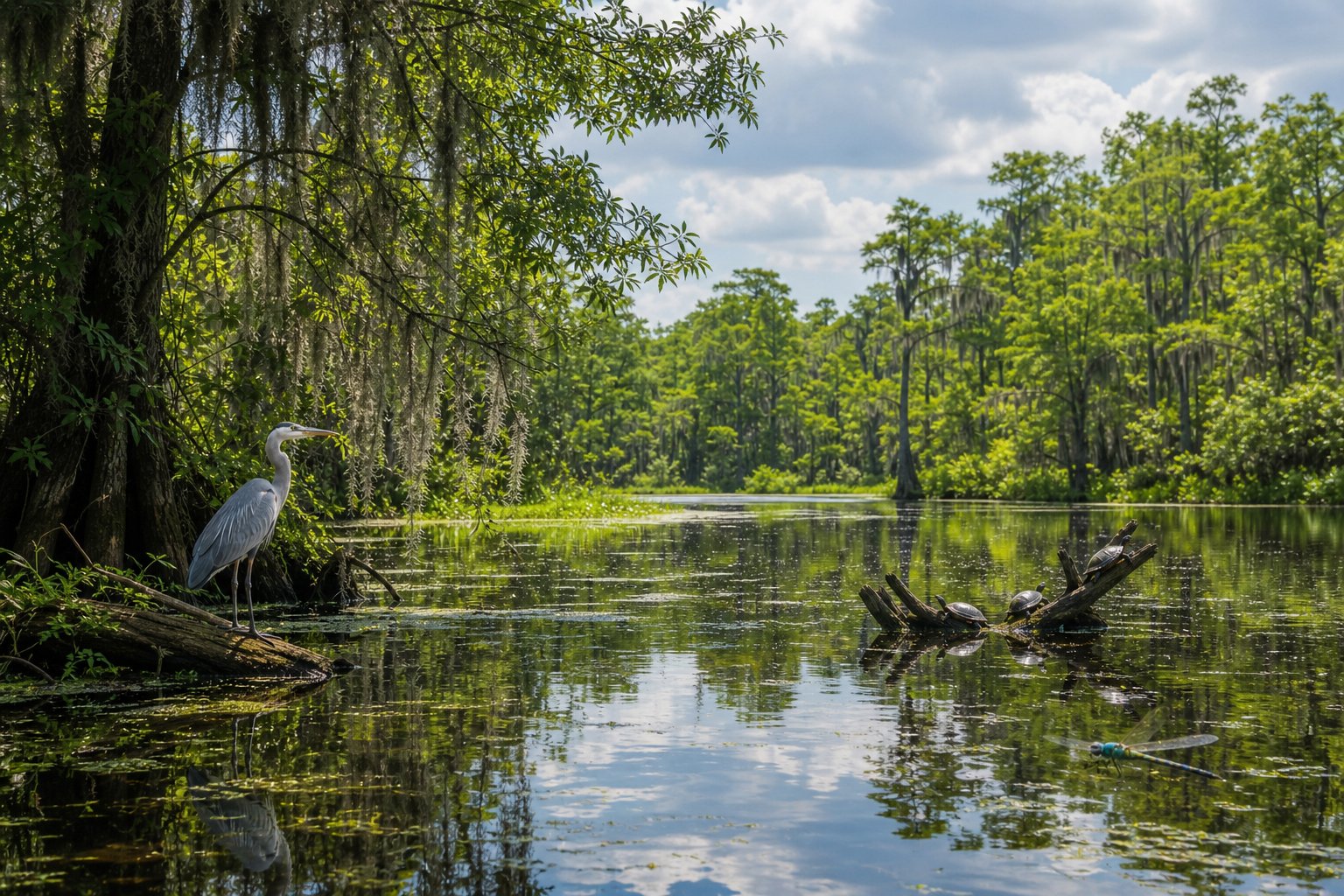
Exploring Bayou Wildlife in Monroe offers a fascinating look at the region’s diverse ecosystems and native species. Monroe’s habitats include slow-moving bayous, marsh edges, and mixed hardwood uplands that support fish, wading birds, alligators, migratory songbirds, and a wide variety of plant life.
Bayou Desiard Ecosystem
Bayou Desiard winds through the city and feeds marshes and oxbow lakes. It holds freshwater fish like largemouth bass and catfish, and supports turtles and amphibians that use shallow backwaters for spawning. Vegetation along the banks—cattail, willow, and submerged aquatic plants—stabilizes soil and offers cover for juvenile fish.
Alligators and river otters use deeper pools and cypress stands for shelter. Anglers find access points and boat launches on the bayou for fishing and paddling. Water quality varies with rainfall and runoff, so seasonal clarity and levels change, affecting where birds and fish concentrate.
Seasonal Bird Migrations
Monroe lies on routes used by many migratory birds that pass through in spring and fall. Waterfowl such as ducks and geese stop at large lakes and flooded fields during cold snaps. Wading birds—herons, egrets, and ibis—feed in shallow marsh edges and agricultural wetlands.
Warblers and other songbirds rest in hardwood stands and riparian corridors during migration nights. The mix of permanent wetlands and upland trees provides both food and sheltered roost sites. Local birdwatchers can expect peak movements during March–May and again in September–November, when species diversity and numbers rise.
Wetland Flora and Fauna
Cypress-tupelo swamps, marsh grasses, and bottomland hardwoods form the core plant communities. Bald cypress and water tupelo dominate swamp islands and standing-water zones. Emergent marsh plants like maidencane and spike rush hold sediments and support invertebrate populations.
Invertebrates—dragonflies, freshwater mussels, and aquatic insects—serve as key food for fish and birds. Mammals such as white-tailed deer, raccoons, and nutria use upland edges and levees to forage. The refuge and park lands within and near Monroe protect these habitats and provide public trails and paddling routes for wildlife viewing.
Guided Tours and Outdoor Activities
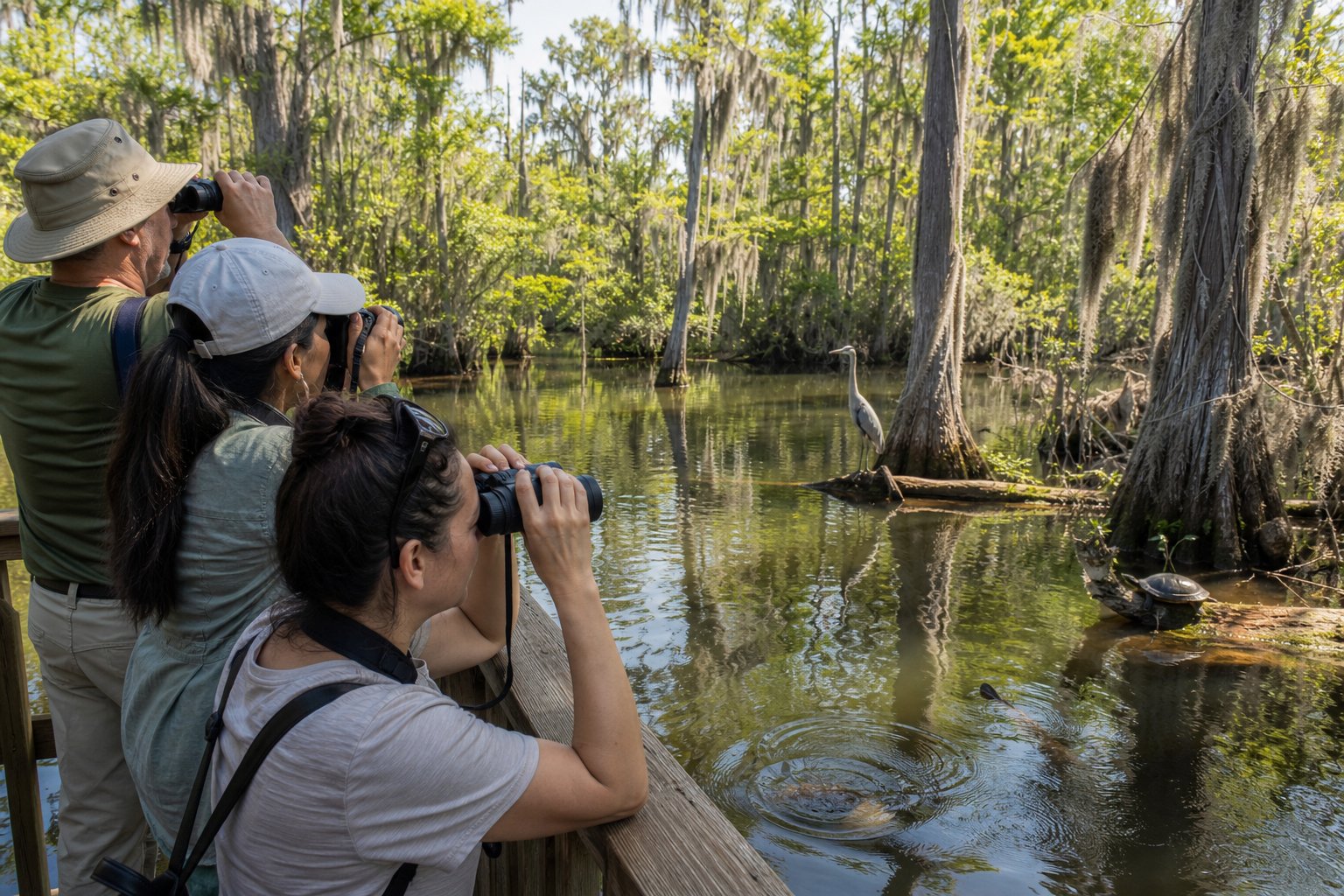
Visitors can join guided paddles, walks, and ranger-led hikes that focus on birds, native plants, and safe lake paddling. Local outfitters and the refuge schedule options for all skill levels and offer gear and basic instruction.
Boat Tours on the Bayou
Guided boat tours run on Black Bayou Lake and the Ouachita River, often in small motor or pontoon boats that limit wakes and protect wildlife. Tours typically last 1–3 hours and include stops for close views of cypress stands, waterfowl, and nesting herons.
Tour operators supply life jackets and basic paddling tips for those joining canoe or kayak trips. They point out access points, best times for sunrise or late-afternoon light, and areas to watch for alligators from a safe distance. For schedules and specific routes, check details from the refuge and local paddling groups, which list trail maps and launch sites.
Wildlife Photography Opportunities
Photographers find scenes of wading birds, bald cypress reflections, and marsh grasses that change with light and tide. Early morning and late afternoon provide the best directional light and active wildlife, so plan sessions around those windows.
Bring a telephoto lens for bird behavior and a low-angle tripod for reflections near the waterline. Use patience and quiet approaches along marked trails and boardwalks to avoid disturbing nests. For permits or group shoots, contact the refuge or local tour operators to learn about approved locations and any seasonal restrictions.
Storage Unit Rentals in Monroe, LA

They can find a range of storage options in Monroe for short or long stays. Facilities offer drive-up units, climate-controlled spaces, and month-to-month leases to fit different needs and budgets.
Prices start low at many local listings, and shoppers can compare rates online before booking. For storage units from $1, check Iron Storage Unit Rentals in – Monroe, LA.
Security features commonly include gated access, cameras, and individual locks. Tenants should ask about access hours and on-site staff to match their schedule.
They should measure items and choose slightly larger units to allow easy packing. Locks, insurance, and climate control help protect items like furniture, documents, and seasonal gear.