

Top Hidden Nature Trails in Long Beach, MS
These paths offer quiet tree cover, easy-to-moderate walking surfaces, and good spots for birdwatching and coastal views. Each trail has clear access points, parking details, and typical conditions to help plan a visit.
Wolf River Nature Preserve Trail
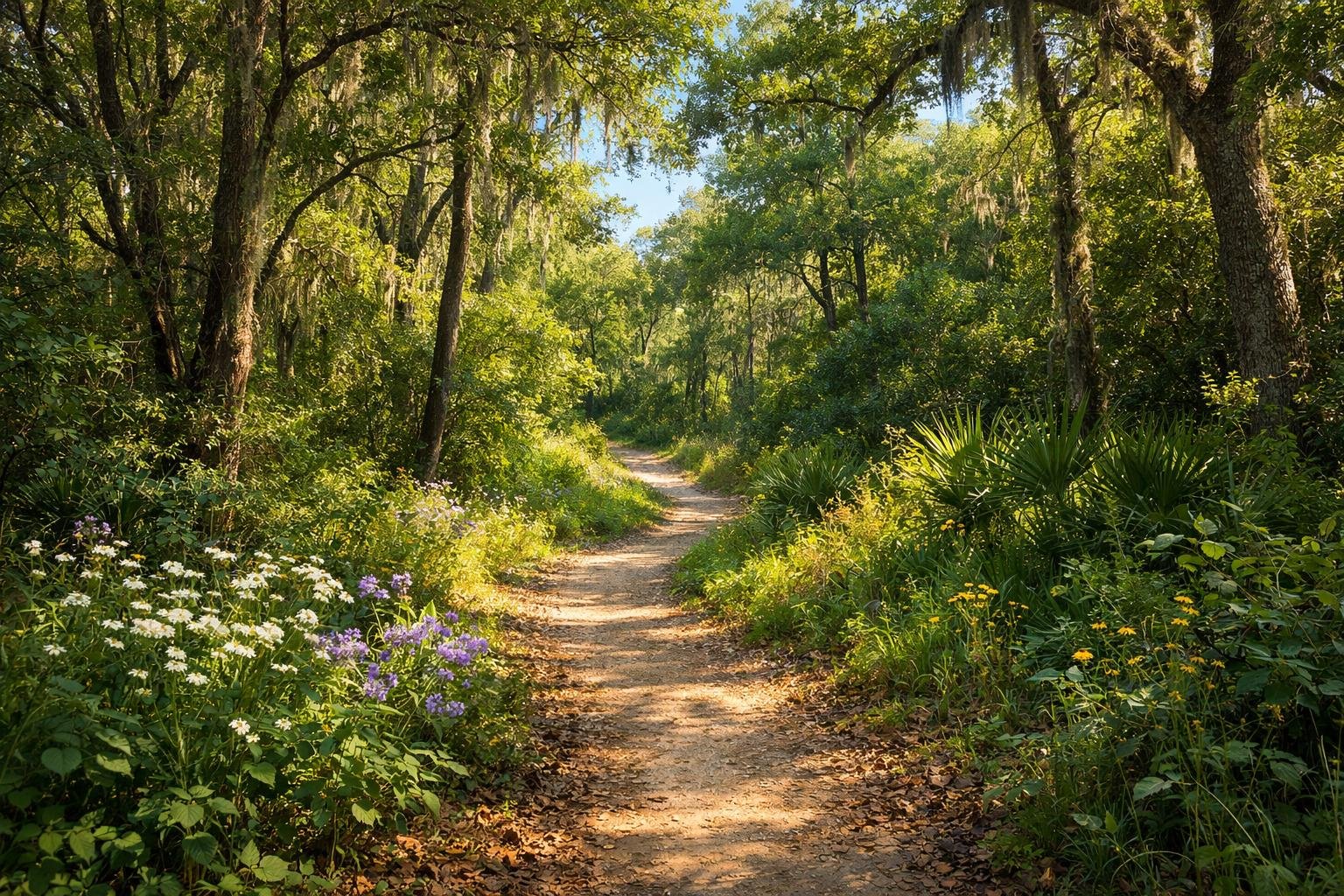
Wolf River Nature Preserve Trail runs along a shaded riparian corridor with mostly compacted dirt and some boardwalk sections over wet spots. The trail stretches about 1.2 miles one way and loops through mixed hardwoods and palmetto understory, making it good for short hikes and nature walks.
Trailheads have limited parking at a small gravel lot off the main road. Visitors should wear sturdy shoes; the trail can be muddy after rain and low spots hold water in spring. Birders often spot wading birds, warblers, and occasional raptors. Dogs are allowed but must stay on leash.
Amenities are minimal: no restrooms, a few benches, and informational signs at the main entrance. The trail connects to neighborhood sidewalks, so hikers can extend their route into nearby streets if desired.
Harbor Square Park Pathways
Harbor Square Park Pathways sit near the waterfront and include paved promenades and short natural-link trails that access marsh views. The paved sections make this ideal for easy walks, family outings, and strollers, while the natural connectors lead to salt marsh edges and small observation points.
Parking is available at the main Harbor Park lot, and the boardwalk provides clear sightlines for boat traffic and harbor activity. Expect interpretive signs and benches spaced along the route. Sunrise and late-afternoon light are best for photography and bird activity.
The pathways are ADA-friendly in many sections, but some natural links have uneven ground and roots. Local fishing piers and picnic areas sit close by, making this a convenient stop for a mixed recreation day.
Long Beach Arboretum Loop
Long Beach Arboretum Loop is a short, well-kept circuit through landscaped plantings and native species beds. The loop measures roughly 0.8–1.0 mile depending on the chosen side paths and includes labeled trees and shrubs for easy identification.
An easy crushed-gravel surface keeps footing steady year-round, and small interpretive displays explain native plant uses and conservation notes. The arboretum hosts seasonal volunteer workdays and occasional guided walks that visitors can join for more insight.
Facilities include limited on-site parking and a shaded picnic area. Because the loop sits near residential zones, it sees light foot traffic and offers a peaceful option for education, short exercise, or casual birdwatching.
Planning Your Hidden Trail Adventure

Pack water, check weather, and choose a trail length that matches fitness and daylight. They should plan parking, trailhead access, and an estimated turn-back time before they set out.
Best Times to Visit
Spring and fall offer the most comfortable temperatures. March through May brings cooler mornings, wildflowers, and migrating songbirds. Daytime highs often sit in the 60s–70s°F, which makes 3–6 mile walks pleasant. Summer days can be hot and humid; plan early morning starts and avoid midday heat. Late afternoons bring fewer people but rising humidity and mosquitoes.
Visit weekdays to avoid crowds at popular trailheads like Tuxachanie Trail. For wetlands and coastal spots, check high-tide times—some paths narrow or flood during high tide. Short winter days mean shorter routes; they should carry extra layers if temperatures drop.
Wildlife and Plant Life You May Encounter
De Soto National Forest and nearby preserves have diverse plants and animals. Hikers often see white-tailed deer, foxes, and raccoons at dawn or dusk. Birdwatchers can spot warblers, herons near marsh edges, and occasional raptors perched on pines.
They should watch for common snakes such as rat snakes and occasionally copperheads; wear boots and avoid tall grass. Plants include longleaf pines, yaupon holly, saw palmetto, and seasonal blooming grasses. In marshy areas expect salt-tolerant grasses and wading birds. Respect wildlife by keeping distance, not feeding animals, and storing food securely.
What to Bring for a Safe Hike
Essentials: at least 1 liter of water per person for short hikes and 2+ liters for longer routes. Bring a map or a downloaded GPS track; cell service can be spotty on forest trails. Wear closed-toe hiking shoes, long socks, and light long sleeves to reduce ticks and brush scratches.
Pack a basic first-aid kit, insect repellent with DEET or picaridin, and sunscreen. Bring a compact rain shell and an extra warm layer in spring and fall. Carry a headlamp or flashlight if there’s any chance of finishing after sunset. Leave a plan with someone: trail name, start time, and expected return time. For coastal or low-lying routes, include tide times and a small dry bag for electronics.
Relevant trail info and maps are available on sites like TrailLink for local trail lengths and surfaces.
Storage Unit Rentals in Long Beach, MS
Residents and visitors often need extra space for gear after a hike or a day at the beach. Long Beach offers many storage options with drive-up and climate-controlled units to fit different needs and budgets.
They can choose smaller units for boxes and seasonal gear or larger units for boats and RVs. Beatline Storage lists sizes from 5×10 up to 10×30 and has covered RV and boat spaces for wider items.
Some facilities focus on convenience and location. Storage Choice operates near East Railroad Street and is easy to reach from the main roads. Iron Storage has several locations around town, giving people options close to home or trailheads.
Iron Storage Unit Rentals in – Long Beach, MS: Iron Storage provides drive-up access and climate control at multiple local sites, making it a practical choice for renters who want flexible access and a range of unit sizes. See Iron Storage’s Long Beach locations for details.